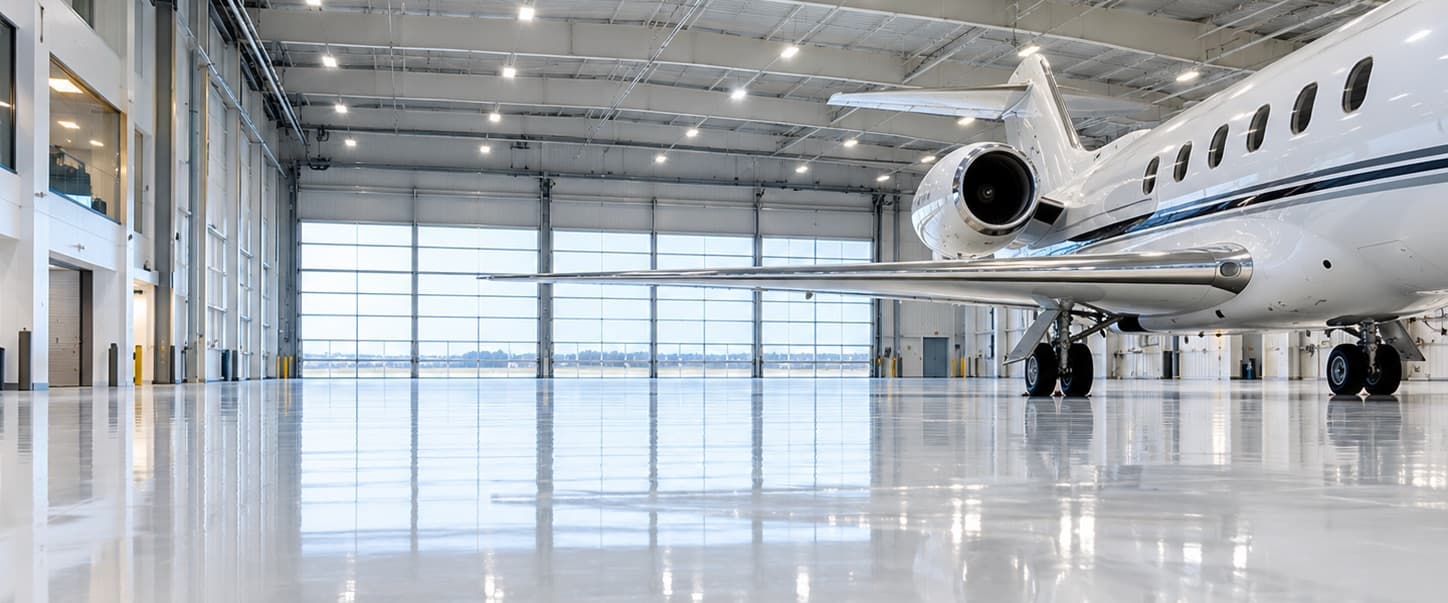
Aircraft hangar flooring
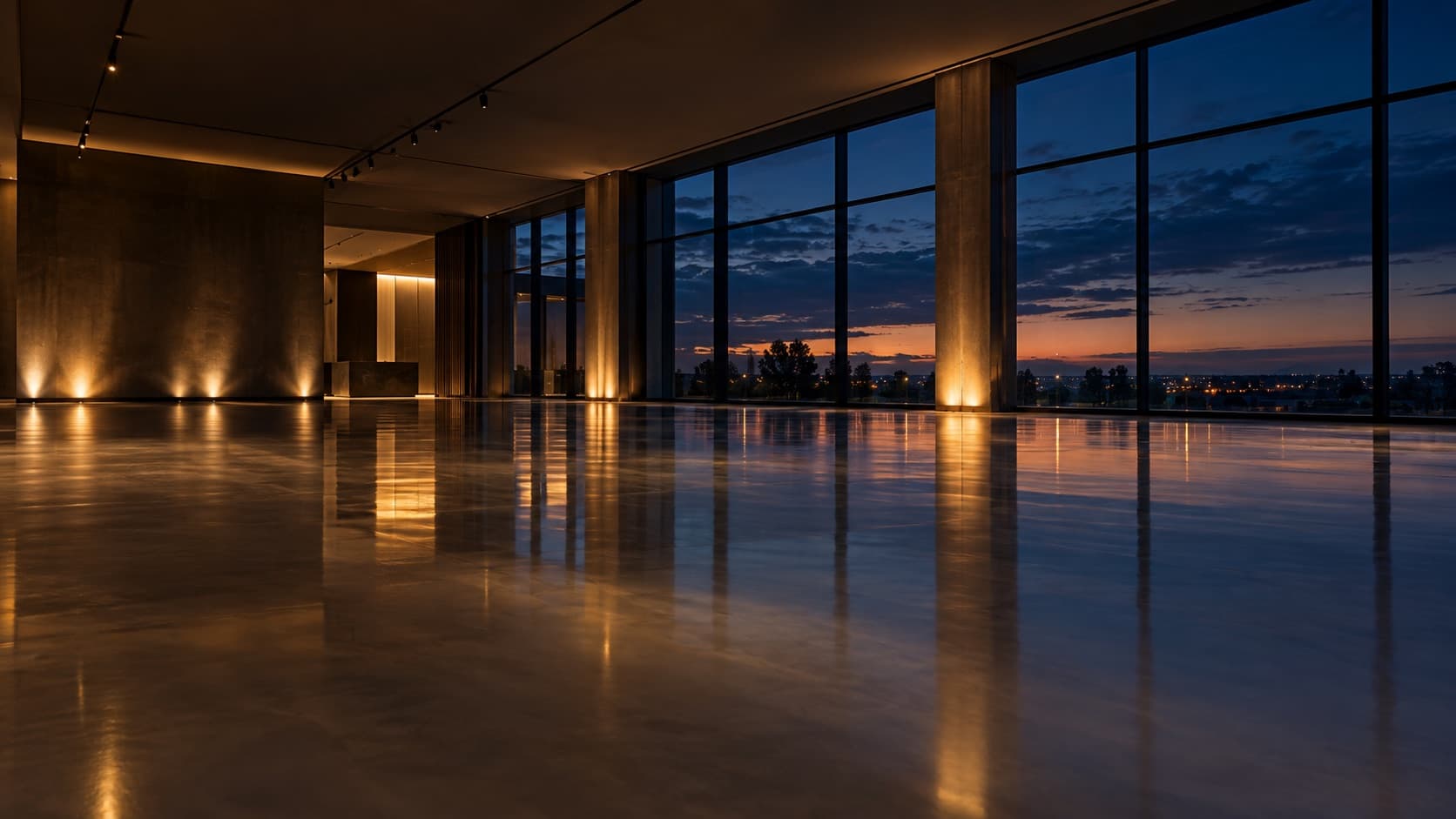
A bright, high-gloss hangar floor built for fuel, fluids and heavy traffic.
- Fuel and fluid resistant
- Won't yellow
- Heavy traffic
Hangar floors take constant heavy traffic, sunlight through open doors and regular contact with fuel, hydraulic fluid and oil. Our multi-layer system is built for long-term durability, chemical resistance and a finish that stays bright.
What it does
Fuel and fluid resistant
Once cured, rated for 7 days of contact with jet fuel (Jet-A and 100LL), gasoline, diesel, hydraulic oil, motor oil and transmission fluid.
Won't yellow
A UV-stable topcoat keeps its color in sunlight, unlike basic epoxy.
Heavy traffic
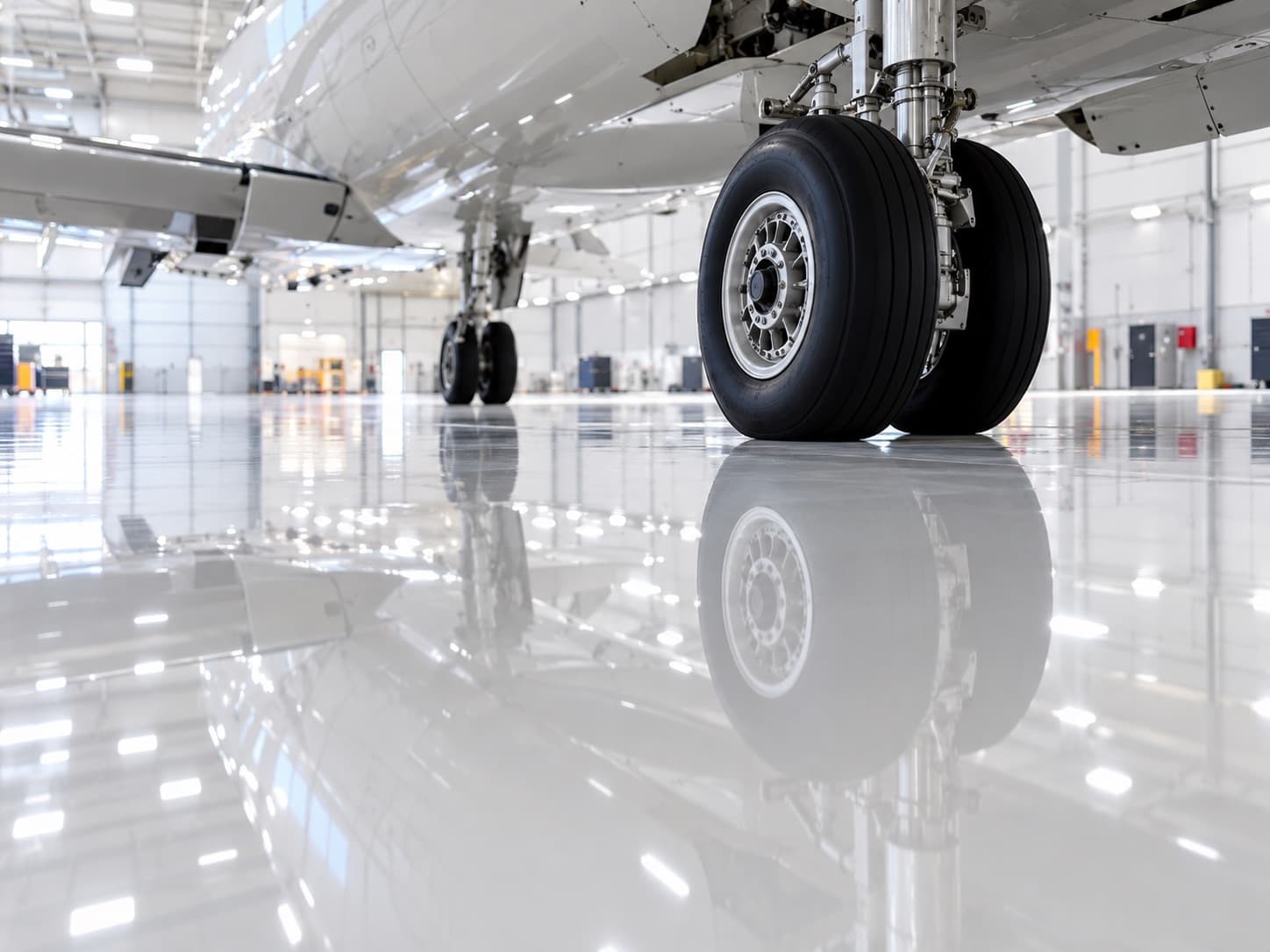
Built for constant heavy traffic from aircraft, tugs and ground equipment.
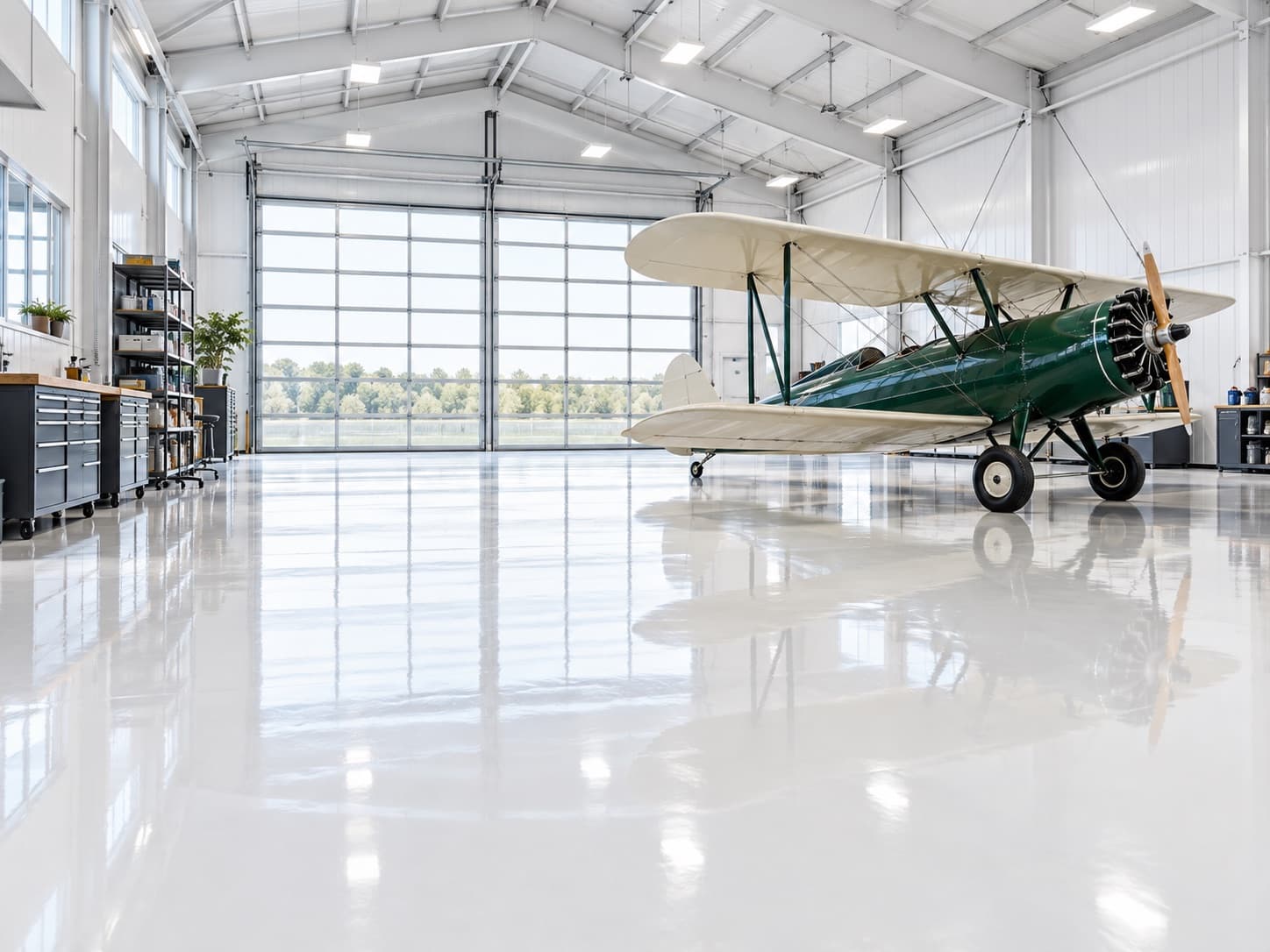
Bright, reflective white
A white base and high-gloss finish brighten the hangar and make spills easy to spot.
Blocks moisture from below
The flexible base coat doubles as a moisture vapor barrier, rated up to 97% relative humidity, so slab moisture can't lift the floor.
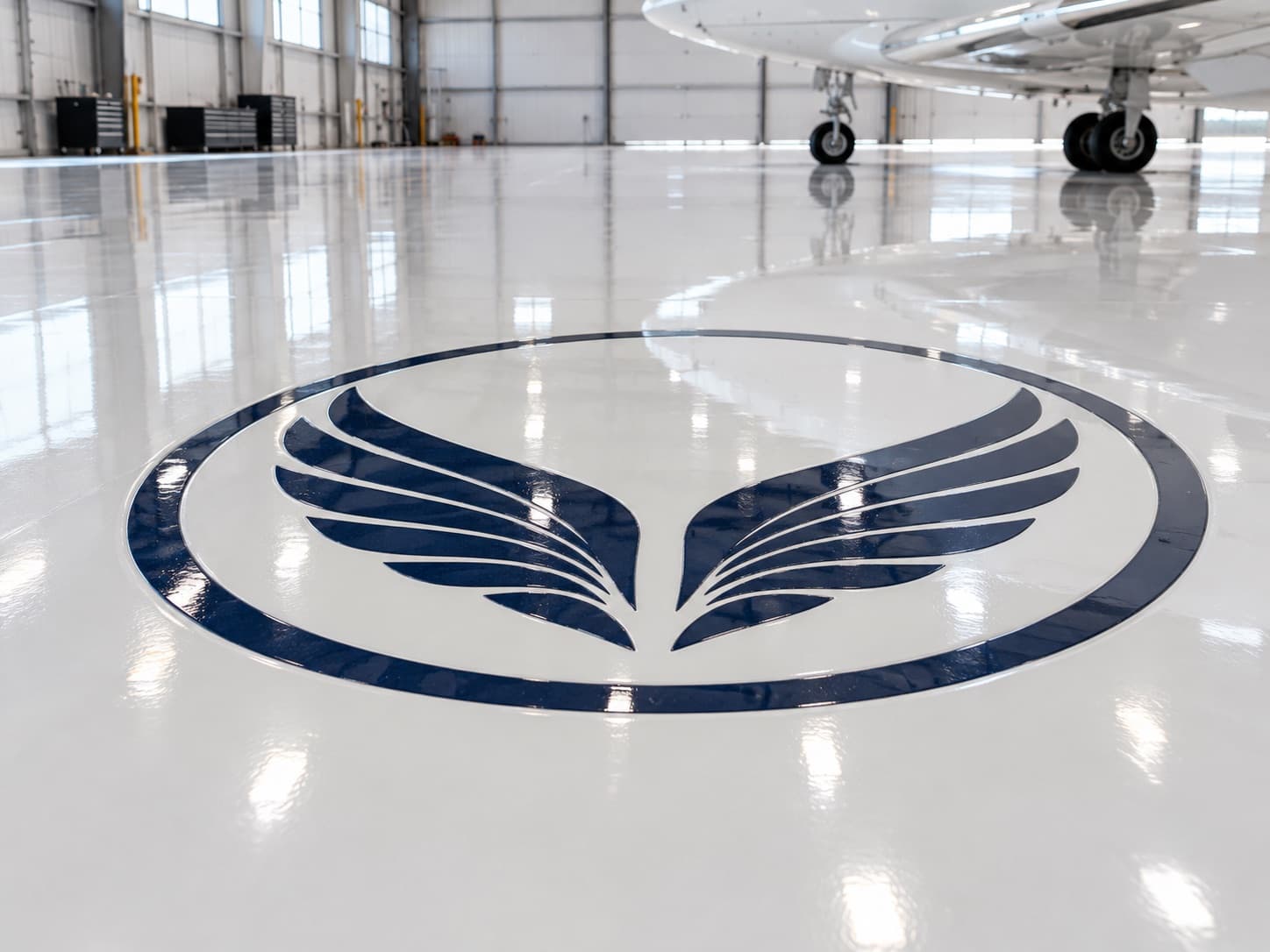
Custom logos
Your logo or markings can be installed right into the floor.
Bridges minor cracks
Unlike rigid epoxy, the flexible urethane base helps bridge minor slab movement and cracks.
Wear and abrasion resistant
Two polyaspartic color coats add abrasion and wear resistance for a durable, low-maintenance finish.
Done in about 5 days
A typical hangar floor takes about 5 days start to finish.
Pressure wash and steam clean
The topcoat stands up to pressure washing, steam cleaning, bleach, ammonia and solvents.
Hot-tire resistant
The topcoat is rated hot-tire resistant, so tugs, carts and vehicles won't pull it up.
Chemical resistance
The high-gloss topcoat is rated against the fuels and fluids a hangar sees every day, and it stands up to pressure washing, steam cleaning, bleach, ammonia and solvents.
Fuels
- Jet fuel (Jet-A and 100LL avgas)
- Gasoline
- Diesel and heating oil
Oils and fluids
- Hydraulic oil
- Motor oil
- Transmission fluid
- Toluene and xylene
Cleaners and other chemicals
- Sodium hydroxide 20%
- Sulfuric acid and other inorganic acids under 20%
- Acetic acid and organic acids under 10%
- Salt solutions and detergents
Ratings are for up to 7 days of direct contact, from the coating manufacturer's chemical resistance testing, once the floor has fully cured (7 days at about 70°F). Wipe up spills promptly.
How it's built
Smooth, high-gloss finish with three integrated layers of color.
- High-gloss topcoat
- Color coat
- White base color
- Flexible base coat
- Penetrating primer
- Surface preparation
- Concrete slab
This is our high-gloss performance system.
- 01
Surface preparation
The concrete is ground to the right profile, and pops, spalls and cracks are repaired. Control and expansion joints are repaired when specified.
- 02
Penetrating primer
A water-based primer roots into the concrete for a much stronger bond.
- 03
Flexible base coat
Flexible urethane bridges minor slab movement and cracks and blocks moisture vapor.
- 04
White base color
A 100% solids epoxy layer sets the white base color and a durable foundation.
- 05
Color coat
A tinted polyaspartic coat adds color, durability, and chemical and abrasion resistance.
- 06
High-gloss topcoat
A tinted polyaspartic topcoat adds wear resistance, UV protection and a high-gloss finish.
How other systems fall short
- Basic epoxy
- Yellows in sunlight and is rigid.
- Urethane cement
- Not flexible; matte and porous without a topcoat.
- Basic polyaspartic
- No moisture protection, and it cures so fast it can fail to bond.
Options
- Custom logos and markings
- Choice of finish color
Who we work with
- Private hangar owners
- FBOs
- MRO and maintenance shops
- Corporate flight departments
- Airport authorities and hangar developers
Get a quote for your aircraft hangars floor
Professionally installed by licensed, insured crews and backed by a lifetime installation warranty.