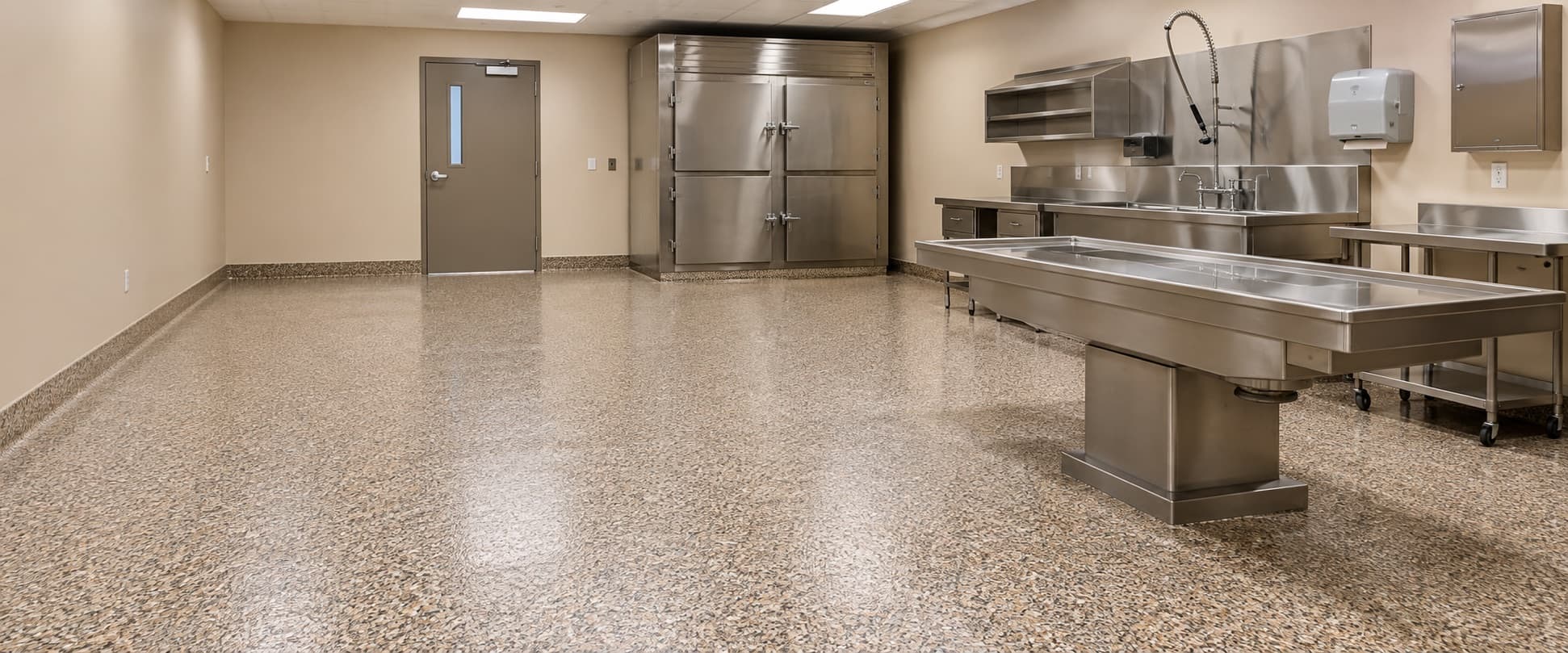
Mortuary flooring
Seamless, hygienic floors built for the prep room.
- Chemical and fluid resistant
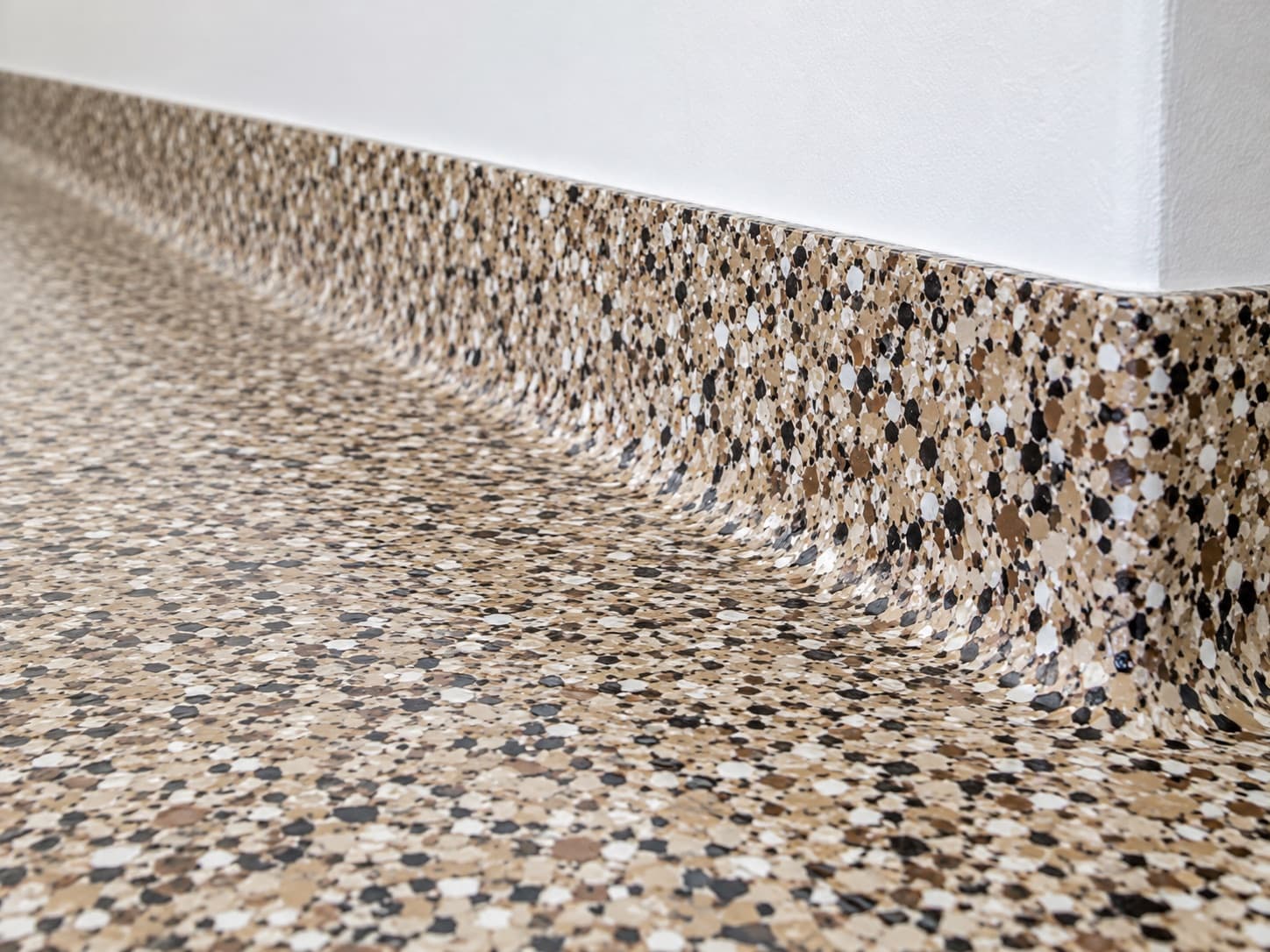
- Seamless with integral cove
- Slip resistant
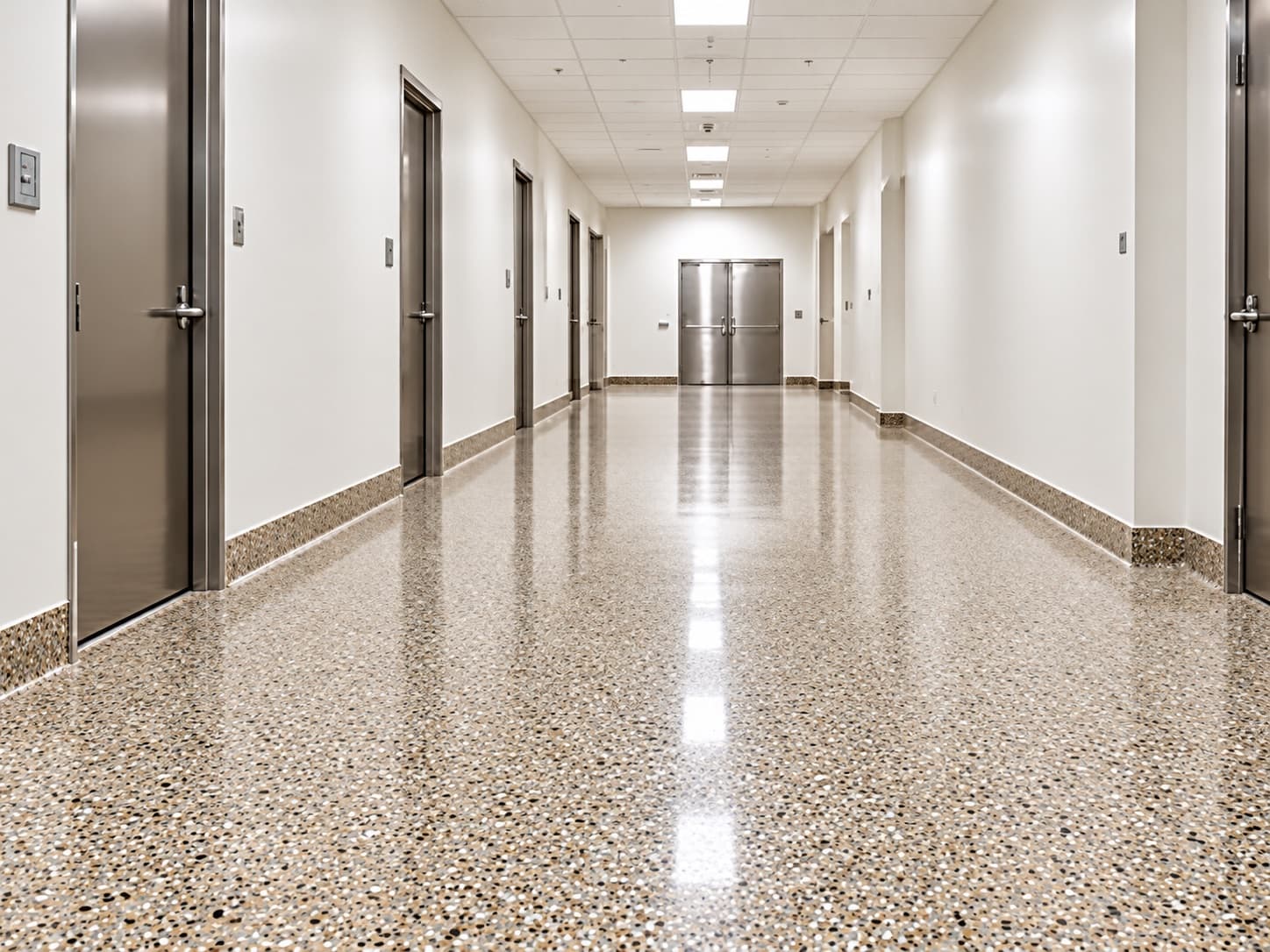
A mortuary floor has to resist chemicals and fluids, clean easily, carry heavy rolling loads and stay safe underfoot. Our seamless coating system is engineered for exactly that, with no grout lines to trap contaminants.
What it does
Chemical and fluid resistant
Holds up to the chemicals and bodily fluids found in a prep room. Once cured, the topcoat is rated for 7 days of contact with 40% formaldehyde (formalin strength).
Seamless with integral cove
No grout lines. The floor curves up the wall, so there's no seam to clean around.
Slip resistant
Optional slip-resistant beads in the topcoat add traction without making the floor harder to clean. With a sand-and-flake texture, the topcoat tested at a 0.96 coefficient of friction.
Built for heavy rolling loads
Handles cots, lifts and carts day after day.
Blocks moisture from below
The flexible base coat doubles as a moisture vapor barrier, rated up to 97% relative humidity, so slab moisture can't lift the floor.
Comfortable underfoot
Softer underfoot than hard epoxy systems, which helps staff who stand through long procedures.
Handles temperature swings
Built to perform in rooms where the temperature changes.
Goes over existing tile
If your prep room has well-bonded tile, we can coat right over it instead of tearing it out. The grout lines won't show through.
Done in about 3 days
A typical mortuary floor takes about 3 days start to finish, and foot traffic can return 24 hours after the final coat.
Very low emissions
The flexible base coat is certified very low emission (EMICODE EC1 PLUS) and LEED-qualified, which matters in a building where staff and families spend their day.
Chemical resistance
The polyurethane topcoat is rated to resist everything on its manufacturer's chemical test list, including the formaldehyde used in prep rooms.
Prep room and lab chemicals
- Formaldehyde 40% (formalin strength)
- Aldehydes
- Alcohols
- Glycol ethers
Acids and caustics
- Sulfuric acid and other inorganic acids under 20%
- Acetic acid and other organic acids
- Sodium hydroxide 20%
- Salt solutions
Fuels, oils and solvents
- Gasoline, diesel and jet fuel
- Motor, hydraulic and transmission oil
- Toluene, xylene and benzene
- Esters, ketones and ethers
Ratings are for up to 7 days of direct contact, from the coating manufacturer's chemical resistance testing, once the floor has fully cured (7 days at about 70°F). Wipe up spills promptly.
How it's built
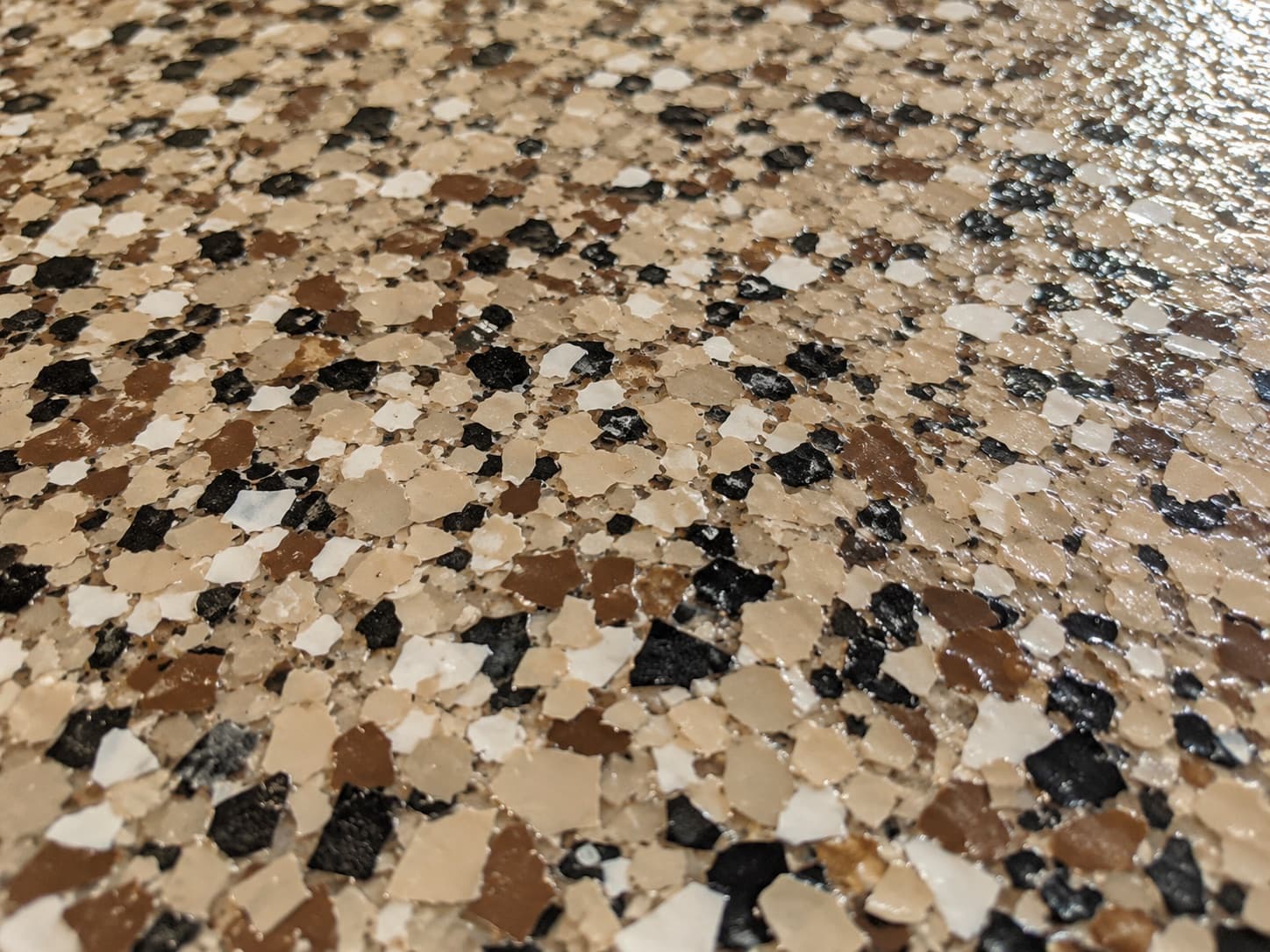
Textured flake or quartz finish, fully seamless, with an integral cove base.
- Protective topcoat
- Optional second broadcast
- Decorative broadcast
- Flexible base coat
- Penetrating primer
- Surface preparation
- Concrete slab
This is our flexible urethane flooring.
- 01
Surface preparation
The concrete is diamond ground to the right profile, and pops, spalls and cracks are repaired. Control and expansion joints are repaired when specified.
- 02
Penetrating primer
A water-based primer soaks into the slab and locks the system to the concrete.
- 03
Flexible base coat
A tinted urethane coat that moves with the slab, helps suppress cracks and blocks moisture vapor.
- 04
Decorative broadcast
Flake or quartz is broadcast into the wet base coat for color and texture.
- 05
Optional second broadcast
For extra build and durability, a second coat gets another full broadcast of flake or quartz.
- 06
Protective topcoat
A 100% solids polyurethane finish that resists abrasion, chemicals and stains. A second topcoat makes it smoother, and slip-resistant beads can be added.
How other systems fall short
- Basic epoxy
- Less flexible, so it handles slab movement and cracks less well.
- Urethane cement
- Not flexible, and it's a powdered mix that creates dust during installation.
- Basic polyaspartic
- No moisture protection, and it cures so fast it can fail to bond.
Options
- Color and flake or quartz blends to match your facility
- Second broadcast for extra durability
- Second topcoat for a smoother finish
- Slip-resistant finish
- Integral cove base
- Coating over existing well-bonded tile
Who we work with
- Funeral homes
- Crematories
- Coroner and medical examiner offices
- Hospital morgues
- University anatomy labs
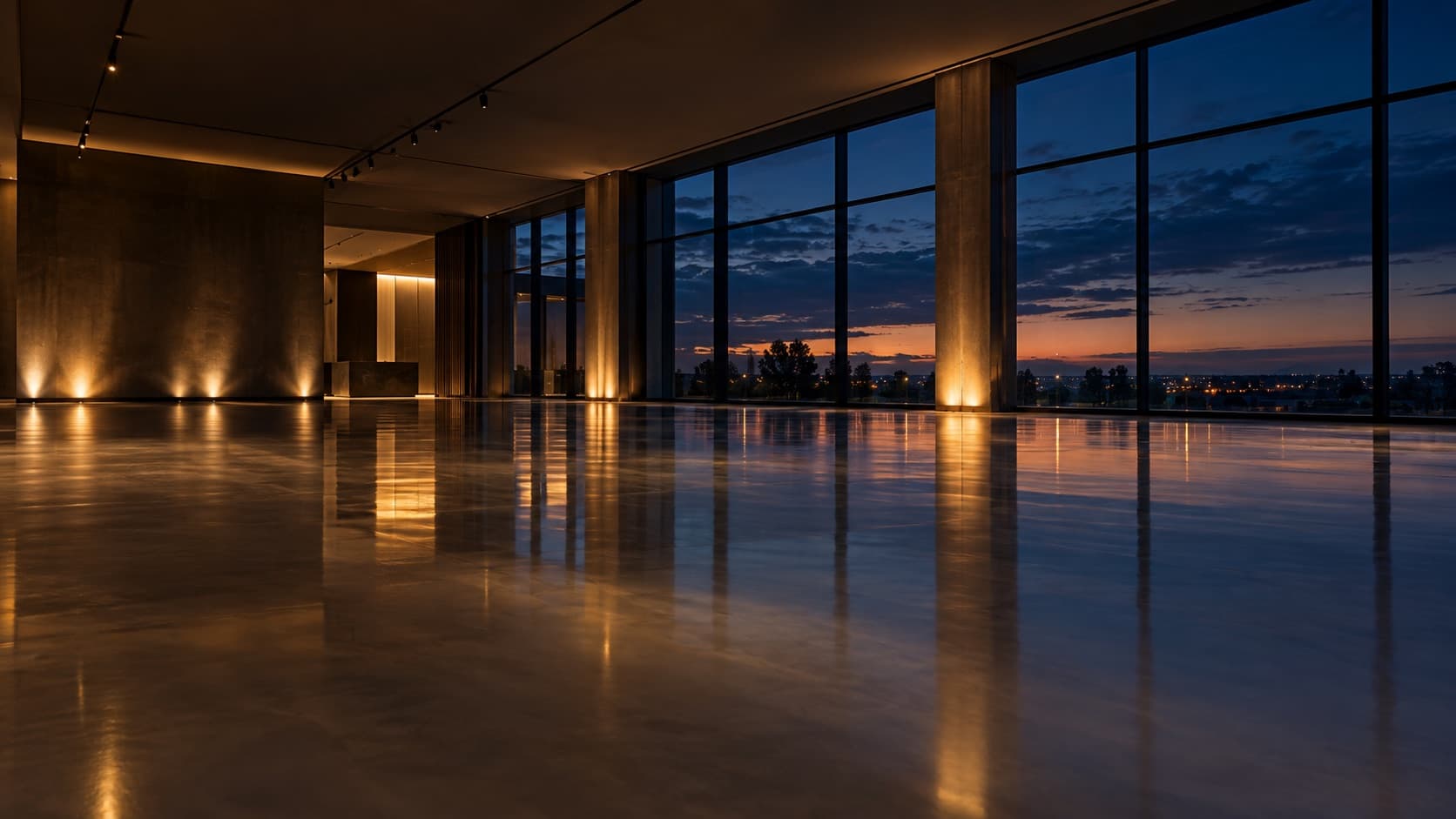
Out of respect for client privacy, mortuaries typically don't allow photos of their facilities. References are available on request.
Get a quote for your mortuary floor
Professionally installed by licensed, insured crews and backed by a lifetime installation warranty.